
Key Takeaways
- ▸Most heparin is made from pig intestinal mucosa, a by-product of pork processing.
- ▸China supplies the majority of the world's crude heparin, creating concentrated supply-chain risk.
- ▸The FDA is encouraging bovine heparin's return to diversify sourcing away from porcine and China.
- ▸Bovine heparin was pulled from the US market in the 1990s over BSE concerns.
- ▸Diversifying heparin sources strengthens resilience for a drug critical to surgery and dialysis.
4DW DESK · MARKET NOTE
Every hospital on earth stocks it. Most patients never hear its name. And its supply chain begins inside an animal.
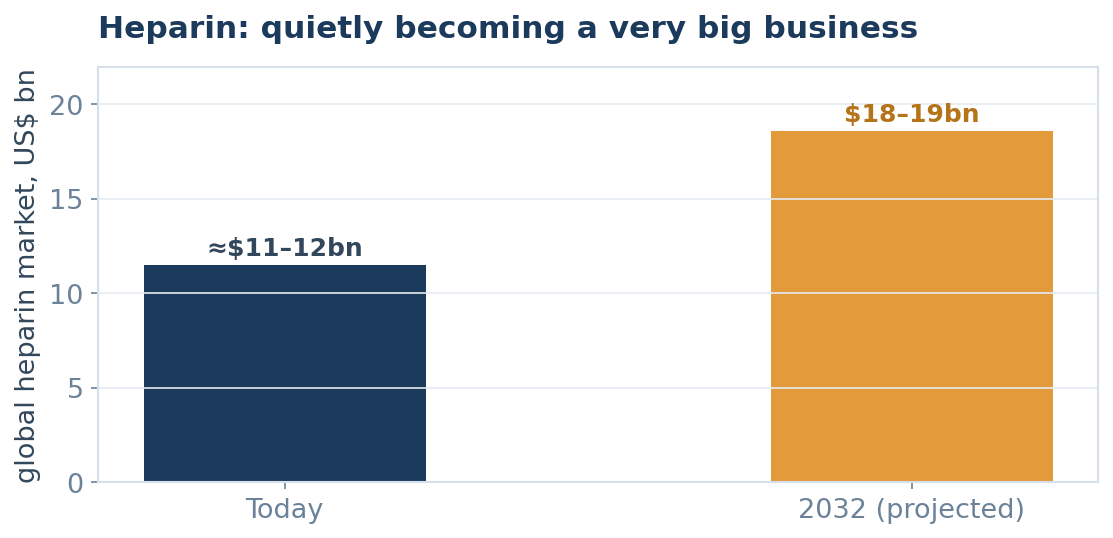
Heparin — the anticoagulant that makes dialysis, cardiac surgery and ICU care possible — is projected to grow into an US$ 18–19 billion market by 2032. Yet virtually all of it still derives from porcine mucosa, with China dominating the crude supply. Regulators have noticed: the US FDA has spent years encouraging the reintroduction of bovine heparin to diversify the base.
Why this matters to the protein trade
Diversification isn't a lab problem — it's a sourcing problem. It needs federally inspected slaughter, identity-preserved glands and mucosa, unbroken cold chains and chain-of-custody paperwork that would make a banker blush. In other words: it needs the hardest discipline in animal protein, applied at industrial scale, in countries with large, healthy herds.
The next decade of anticoagulants will be won in the cold room, not the cleanroom.
South America — with the world's largest commercial cattle base and mature federal inspection — is the obvious candidate origin. The laboratories know it; the race is for suppliers who can deliver pharma-grade consistency, lot after lot.
THE 4DW ANGLE
Pharmaceutical raw materials are our specialty segment: glands, cartilage and organ-derived materials in identity-preserved lots, unbroken cold chain, full documentation — the most demanding chain in protein, and the one we like best.
▮ Frequently asked questions
Where does heparin come from?
Heparin is derived mainly from the intestinal mucosa of pigs, making it a by-product of pork processing. China dominates global production of crude heparin because it has the world's largest pig population. Smaller volumes come from cattle, and the FDA is now encouraging bovine heparin to diversify supply.
Why is bovine heparin making a comeback?
Bovine heparin is returning to reduce heavy reliance on porcine heparin and Chinese supply. After the 2008 contaminated-heparin crisis exposed supply risks, the FDA began encouraging bovine sources to diversify. Bovine heparin, sourced from cattle, was withdrawn from the US market in the 1990s over mad cow (BSE) concerns.
Why is heparin's supply chain considered risky?
Heparin's supply chain is risky because it is highly concentrated: most crude heparin originates in China, and the drug depends almost entirely on one animal source, pigs. Disease outbreaks, trade disruptions, or contamination can threaten supply of this essential anticoagulant, prompting regulators to encourage bovine and geographically diversified sourcing.
Related from the desk
SOURCES