Key Takeaways
- ▸Nestle's H1 2026 Petcare sales reached CHF 8.9 billion, about $10.9 billion.
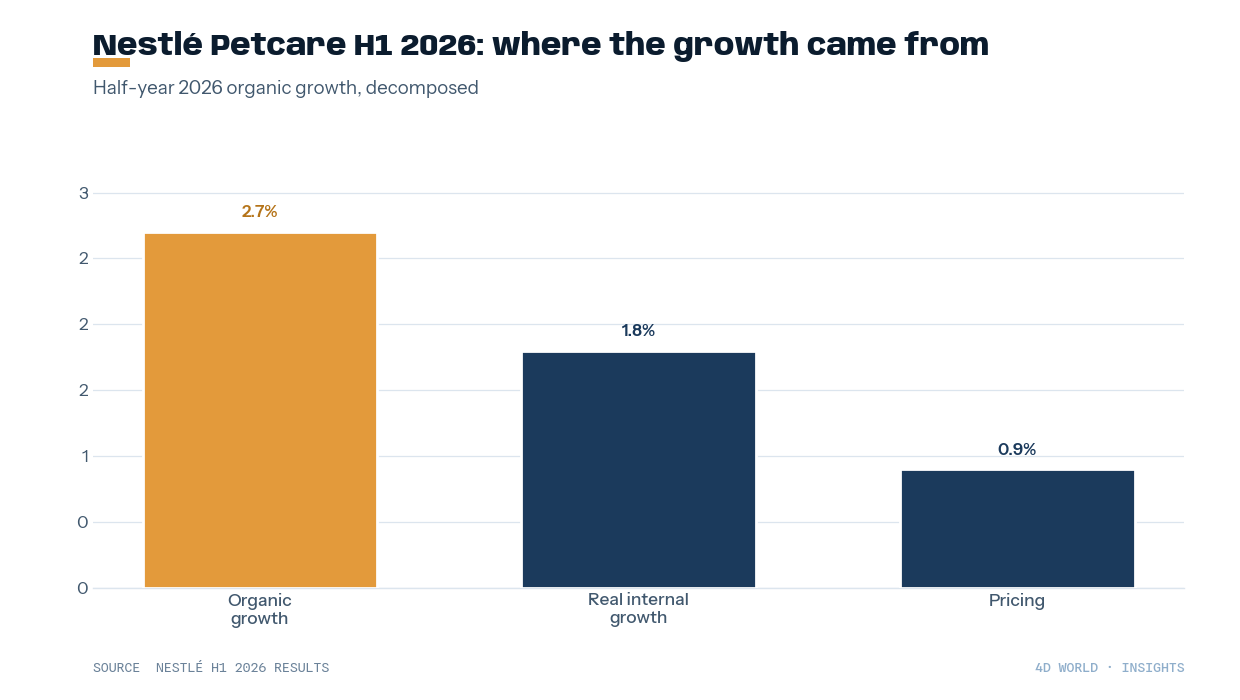
- ▸Organic growth was 2.7%: real internal growth of 1.8% plus pricing of 0.9%.
- ▸Pro Plan, ONE and Felix brands led the growth.
- ▸Zone Europe petcare grew mid-single-digit on premium wet cat food and e-commerce.
- ▸Ingredient house Symrise's pet division posted a slight organic decline as pricing normalised.
EUROPE PET FOOD WATCH · Nº 8
When the world's biggest food company reports its pet numbers, the whole industry reads them as a thermometer. Nestlé just took pet demand's temperature: still warm.

H1 2026 Petcare sales came in at CHF 8.9 billion (about $10.9bn), with organic growth of +2.7% — split between real internal growth of +1.8% and pricing of +0.9%. Pro Plan, ONE and Felix led the way. It is a moderate number, but the composition is the story.
Zone Europe petcare grew at a mid-single-digit clip, powered by premium wet cat food and e-commerce — the very trend now showing up in factory announcements across the continent. The contrast came from flavour-and-ingredient house Symrise, whose pet-food division reported a slight organic decline as pricing normalised — a reminder that the ingredient layer feels cost swings before the brand layer does.
Read the mix, not just the top line
Growth split roughly between volume and price (+1.8% real, +0.9% pricing) is the healthy kind — real demand, not just inflation. And the leaders are premium wet and e-commerce, the two segments hungriest for high-quality, documented raw material.
Pricing power fades; volume growth compounds. Nestlé's pet numbers still have both.
The 4DW Angle
Real internal growth in premium wet is a demand signal that lands directly on suppliers of fresh meat and organs. When the category leader grows on volume rather than price, it is buying more raw protein — and asking for more proof of where it came from.
▮ Frequently asked questions
What do Nestle's pet care results say about pet demand?
Pet demand is still warm. Nestle's H1 2026 Petcare sales hit CHF 8.9 billion, up 2.7% organically - split between real internal growth of 1.8% and pricing of 0.9%. That roughly even split of volume and price is the healthy kind: real demand, not just inflation.
What drove Nestle Petcare's growth in H1 2026?
Zone Europe petcare grew at a mid-single-digit clip, powered by premium wet cat food and e-commerce - the same trend showing up in factory announcements across the continent. Brands Pro Plan, ONE and Felix led, lifting total Petcare sales to CHF 8.9 billion, up 2.7% organically.
Why did Symrise's pet division decline while Nestle grew?
Symrise, a flavour-and-ingredient house, reported a slight organic decline in its pet-food division as pricing normalised, even as Nestle's brands grew 2.7%. The contrast is a reminder that the ingredient layer feels cost swings before the brand layer does - pricing power fades faster upstream than at the shelf.
Related from the desk
SOURCES