
Key Takeaways
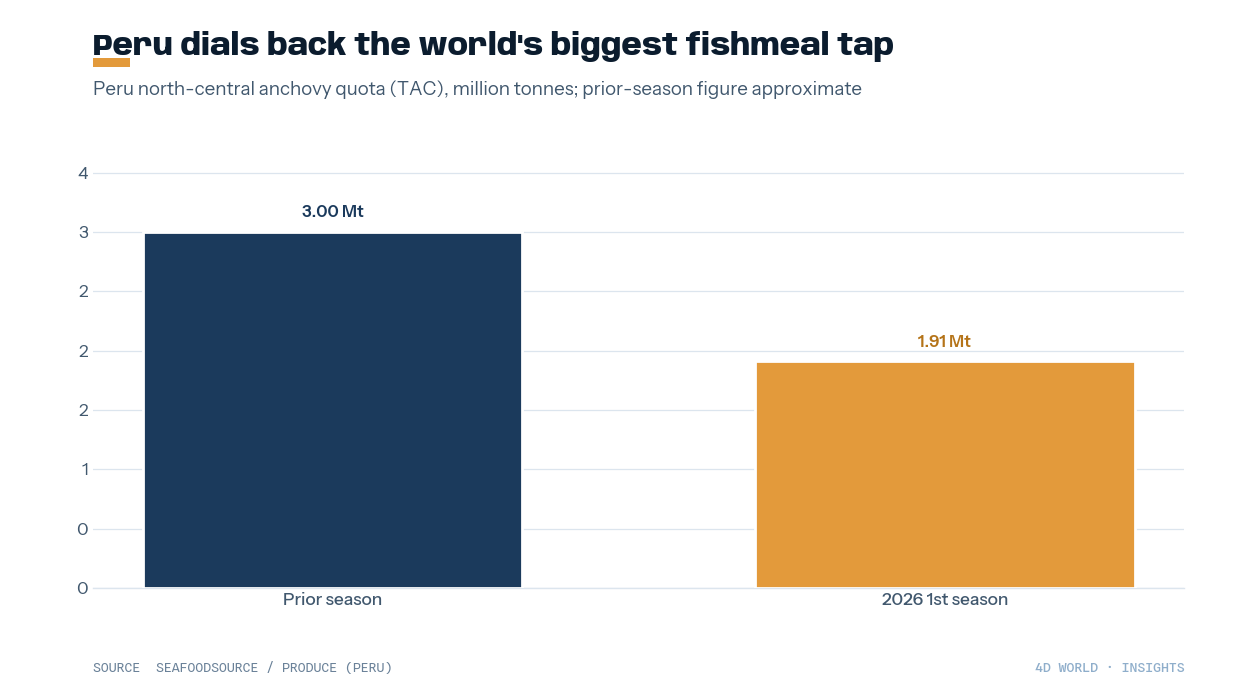
- ▸Peru set its first anchovy season quota at 1.91 million tonnes, down about 36%.
- ▸Peru's anchoveta fishery is the backbone of the world's fishmeal supply.
- ▸A tighter fishmeal tap firms prices globally and pushes formulators toward substitutes.
- ▸Poultry meal and feather meal are proven partial fishmeal substitutes in aquaculture diets.
- ▸European aquafeed use of processed animal protein jumped 17.5% last year.
INGREDIENT SPOTLIGHT · Nº 3
The single most important number in global aquafeed is not set in a feed mill — it is set off the coast of Peru. And this year, Peru set it about 36% lower.
Peru's anchoveta fishery is the backbone of the world's fishmeal supply. Its regulators anchored the first north-central season at a total allowable catch of 1.91 million tonnes, down from around 3.0 million a year earlier. When that tap tightens, fishmeal prices firm globally — and formulators start hunting for alternatives.
▮ Where poultry meal comes in

Enter the rendering plant. Poultry meal and feather meal — high-protein, digestible, and produced from by-products that would otherwise be waste — are proven partial substitutes for fishmeal in aquaculture diets. The pull is already visible in Europe, where aquafeed use of processed animal protein jumped 17.5% last year.
What buyers check
Substitution is not free: aquafeed buyers scrutinize protein content, digestibility, ash and freshness, plus the traceability that lets a farmed-fish brand stand behind its feed. Consistent, well-specified meal is what wins these contracts.
A leaner anchovy season in the Pacific quietly raises the value of every tonne of poultry meal leaving a rendering line.
The 4DW Angle
Poultry meal and feather meal are core outputs of the rendering vertical we operate, and aquafeed is a fast-growing home for them. When ocean supply tightens, land-animal proteins gain — and origins that can deliver spec-consistent, documented meal are positioned to capture that swing.

▮ Frequently asked questions
How does Peru's anchovy quota affect fishmeal prices?
Peru anchored its first north-central anchovy season at 1.91 million tonnes, down from around 3.0 million a year earlier - about 36% lower. Because Peru's anchoveta fishery is the backbone of global fishmeal supply, that tighter tap firms fishmeal prices worldwide and pushes feed formulators to hunt for alternatives.
Can poultry meal replace fishmeal in aquafeed?
Yes, partly. Poultry meal and feather meal are high-protein, digestible by-products that serve as proven partial substitutes for fishmeal in aquaculture diets. The pull is already visible in Europe, where aquafeed use of processed animal protein jumped 17.5% last year as ocean supply tightened.
What do aquafeed buyers check in poultry meal?
Aquafeed buyers scrutinize protein content, digestibility, ash and freshness, plus the traceability that lets a farmed-fish brand stand behind its feed. Substitution is not free - consistent, well-specified meal is what wins these contracts, especially when a leaner anchovy season raises the value of every tonne of poultry meal.
Related from the desk
SOURCES