
Key Takeaways
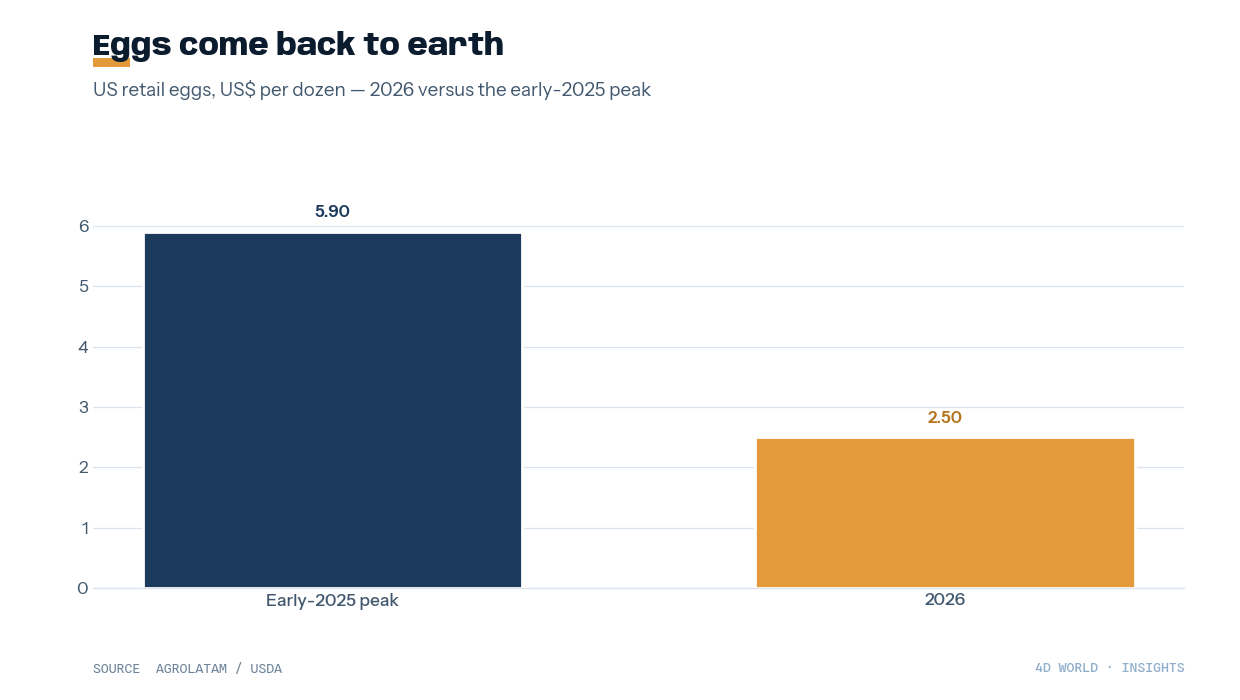
- ▸US egg prices have fallen to about $2.50 a dozen from a $5.90 peak.
- ▸The US layer flock has been rebuilt to 378.6 million hens.
- ▸First-quarter US bird losses fell to 20.8 million from 32.8 million a year earlier.
- ▸EU poultry HPAI outbreaks held roughly flat at 186 between late February and June.
- ▸EU wild-bird detections ran about three times higher, near 763.
MARKET PULSE · Nº 7
After two years of headlines, the bird-flu emergency is finally exhaling. US egg prices have fallen back toward $2.50 a dozen from a peak near $5.90, and the summer outlook is calm. But read past the relief and the picture splits in two.

In the United States, the recovery is real: the layer flock has been rebuilt to 378.6 million hens, and first-quarter bird losses fell to 20.8 million from 32.8 million a year earlier. Fewer culls, more hens, cheaper eggs — the classic shape of a supply shock unwinding.
▮ The two-speed picture
Europe is the cautionary half. Poultry outbreaks held roughly flat year on year (186 between late February and early June), and summer risk is low. But wild-bird detections ran about three times higher, near 763 — and wild birds are the reservoir that reseeds farm outbreaks when autumn migration begins.
Why it matters
Eggs and poultry are the cheapest animal protein on the planet, so a bird-flu wave is a food-security event, not just a market wobble. A quiet summer is welcome — but the wild-bird signal means the all-clear is seasonal, not structural.
Bird flu never really leaves; it migrates. A calm summer is a truce with the calendar, not a peace treaty.
The 4DW Angle
HPAI is now a permanent variable in protein planning, capable of erasing supply overnight. A book spread across proteins and origins is the practical hedge: when one poultry region goes dark, multi-protein, multi-country sourcing keeps the shelves — and the contracts — supplied.

▮ Frequently asked questions
Are egg prices going down in 2026?
Yes. US egg prices have fallen back to about $2.50 a dozen from a peak near $5.90 as the bird-flu emergency eases. The layer flock has been rebuilt to 378.6 million hens, and first-quarter bird losses dropped to 20.8 million from 32.8 million a year earlier.
Is bird flu still a risk in Europe?
Yes, seasonally. EU poultry outbreaks held roughly flat year-on-year - 186 between late February and early June - and summer risk is low. But wild-bird detections ran about three times higher, near 763, and wild birds are the reservoir that reseeds farm outbreaks when autumn migration begins.
Why does a bird-flu outbreak matter for food security?
Eggs and poultry are the cheapest animal protein on the planet, so a bird-flu wave is a food-security event, not just a market wobble. The 2026 calm is welcome - US eggs are back near $2.50 - but the wild-bird signal near 763 means the all-clear is seasonal, not structural.
Related from the desk
SOURCES