
Key Takeaways
- ▸Drewry's composite World Container Index sits near US$4,547 per FEU in mid-July.
- ▸That is the highest reading since September 2024, after touching $4,639.
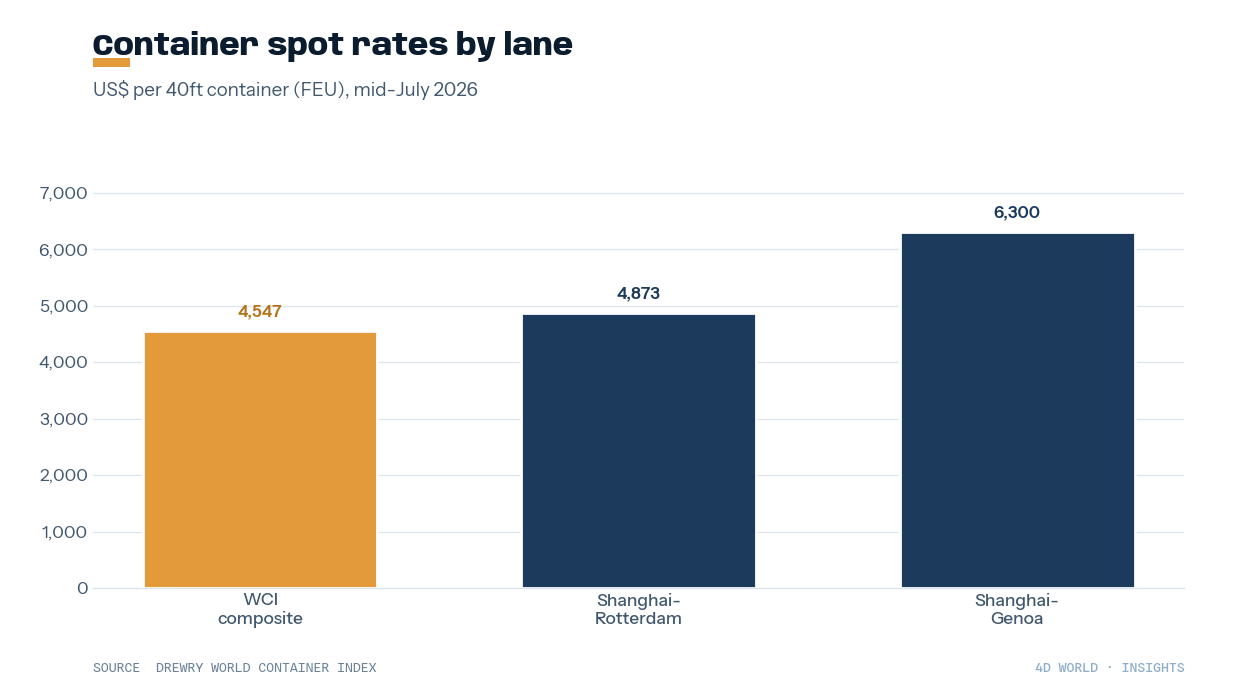
- ▸Shanghai-Rotterdam runs at $4,873 and Shanghai-Genoa at $6,300 per FEU.
- ▸Red Sea and Bab el-Mandeb risk keeps ships routing the long way around Africa.
- ▸Reefer rates take their cue from the same vessels and legs as dry boxes.
TRADE & REGULATION
Book a container today and the only certainty is that the price will be different next week. Ocean freight is back on a rollercoaster — and refrigerated cargo is strapped in with everyone else.

Drewry's composite World Container Index sits at about US$4,547 per FEU in mid-July, down roughly 2% week-on-week after touching $4,639 — its highest reading since September 2024. The headline lanes run hotter still: Shanghai–Rotterdam at $4,873 and Shanghai–Genoa at $6,300. These are dry-box benchmarks, but reefer rates take their cue from the same vessels and legs.
The driver behind the climb is geography, not just demand. Persistent Red Sea and Bab el-Mandeb risk keeps much of the fleet taking the long way round Africa, which soaks up capacity and tightens every westbound lane. When the Mediterranean and North Europe legs spike, refrigerated protein out of South America ends up paying a version of the same bill.
Why reefers feel the dry-box index
The World Container Index tracks dry boxes, but reefer space moves on the same ships and the same routes. A market that reprices weekly turns freight from a line item into a live variable — and rewards whoever booked with a plan rather than on the spot.
In a normal year, freight is a line item. In a year like this, it's a strategy.
The 4DW Angle
Our desk books reefer space out of South America the year round, which means we live inside this volatility instead of reading about it. Standing programmes and carrier relationships are how a trader absorbs a swinging market so the buyer at the other end does not have to.

▮ Frequently asked questions
Why are container shipping rates so high in 2026?
Geography, not just demand. Persistent Red Sea and Bab el-Mandeb risk keeps much of the fleet routing the long way around Africa, soaking up capacity and tightening westbound lanes. Drewry's World Container Index sits near US$4,547 per FEU in mid-July, its highest since September 2024.
How much does it cost to ship a container from Shanghai to Europe?
In mid-July 2026, Drewry pegged Shanghai-Rotterdam at $4,873 and Shanghai-Genoa at $6,300 per 40ft container, against a composite index of about $4,547. These are dry-box benchmarks, but reefer rates move on the same ships and routes, so refrigerated protein pays a version of the same bill.
Do reefer rates follow the World Container Index?
Yes, indirectly. The World Container Index tracks dry boxes, but reefer space moves on the same ships and the same routes, so it takes its cue from the same benchmarks - near $4,547 per FEU in mid-July 2026. A market repricing weekly turns freight from a line item into a live variable.
Related from the desk
SOURCES