
Key Takeaways
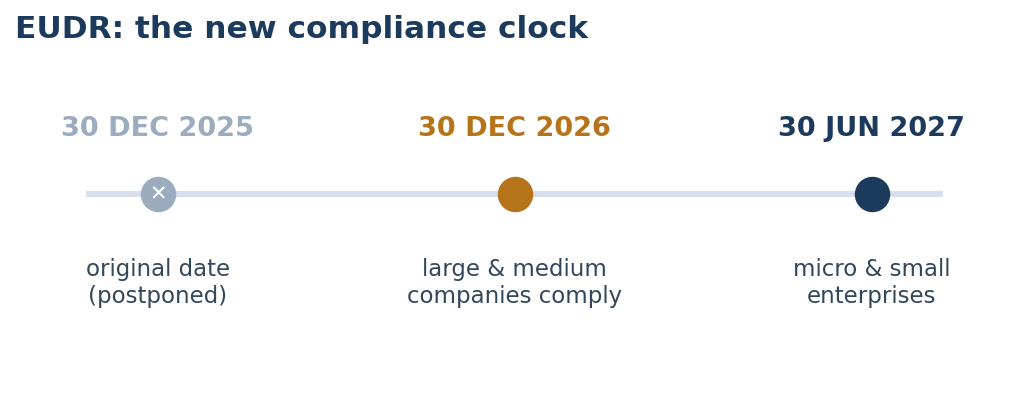
- ▸The EUDR applies from 30 December 2026 for large and medium-sized operators and traders.
- ▸Cattle and beef are among seven commodities covered by the regulation.
- ▸Products must be deforestation-free, meaning no deforestation after 31 December 2020.
- ▸Exporters must provide GPS geolocation coordinates for the plots where cattle were raised.
- ▸Micro and small enterprises get a later deadline of 30 June 2027.
4DW DESK · MARKET NOTE
The EU's deforestation regulation has been postponed once more — and simplified in ways that genuinely matter for the beef chain.
Under Regulation (EU) 2025/2650, published in December, large and medium companies must comply from 30 December 2026; micro and small enterprises follow on 30 June 2027. Cattle products remain squarely in scope: geolocation of origin, deforestation-free after the 2020 cut-off, due diligence statements in the EU information system.
What actually got easier
Three changes stand out. Only the first operator placing goods on the EU market files the due diligence statement — everyone downstream just keeps the reference number. Small producers in low-risk countries file a single simplified declaration. And downstream traders register in the system but skip periodic filings. Less paperwork theater, same core promise: prove where the animal grazed.
A delay is not a holiday. The chains that treat 2026 as a rehearsal year will own the European shelf in 2027.
Our advice hasn't changed since the first deadline: build the geolocation file per supplying farm now, wire it to your health certificates, and test a full dossier with a friendly importer before December.
THE 4DW ANGLE
Access is our third dimension: TRACES, EUDR files, certificates — operated from inside a federally inspected plant (SIF 4075). Buyers get compliant origin without carrying the bureaucracy; suppliers get destinations their own registrations cannot reach.
▮ Frequently asked questions
When does the EUDR take effect?
The EU Deforestation Regulation (EUDR) applies from 30 December 2026 for large and medium-sized companies, after a one-year delay from the original 2025 date. Micro and small enterprises have until 30 June 2027. From these dates, covered products must meet due-diligence rules to be placed on the EU market.
Does the EUDR apply to beef and cattle?
Yes. Cattle is one of seven commodities covered by the EUDR, alongside soy, palm oil, coffee, cocoa, rubber, and wood. Beef, leather, and other cattle-derived products must be deforestation-free and traceable. Exporters shipping cattle products to the EU must comply with the regulation's due-diligence and geolocation requirements.
What does 'deforestation-free' require under the EUDR?
Deforestation-free means the commodity was not produced on land deforested after 31 December 2020. To prove this, operators must collect GPS geolocation coordinates of the production plots and file due-diligence statements. For cattle, this traces where animals were raised, ensuring the supply chain did not drive recent deforestation.
Related from the desk
SOURCES