
Key Takeaways
- ▸US retail ground beef is near $8.62 a pound, up 12% year-on-year.
- ▸US retail steak runs about $12.80 a pound, up 16%.
- ▸The FAO Meat Price Index is pressing record territory.
- ▸A structurally tight cattle supply, not a demand spike, drives the prices.
- ▸Higher steer prices lift trimmings, offal, fats and rendered meals alike.
THE BIG PICTURE
The price of a steer does not stop at the butcher. When American beef hits record highs, the ripple travels through the burger, the kibble, the soap and the leather seat — the whole downstream economy of the animal.
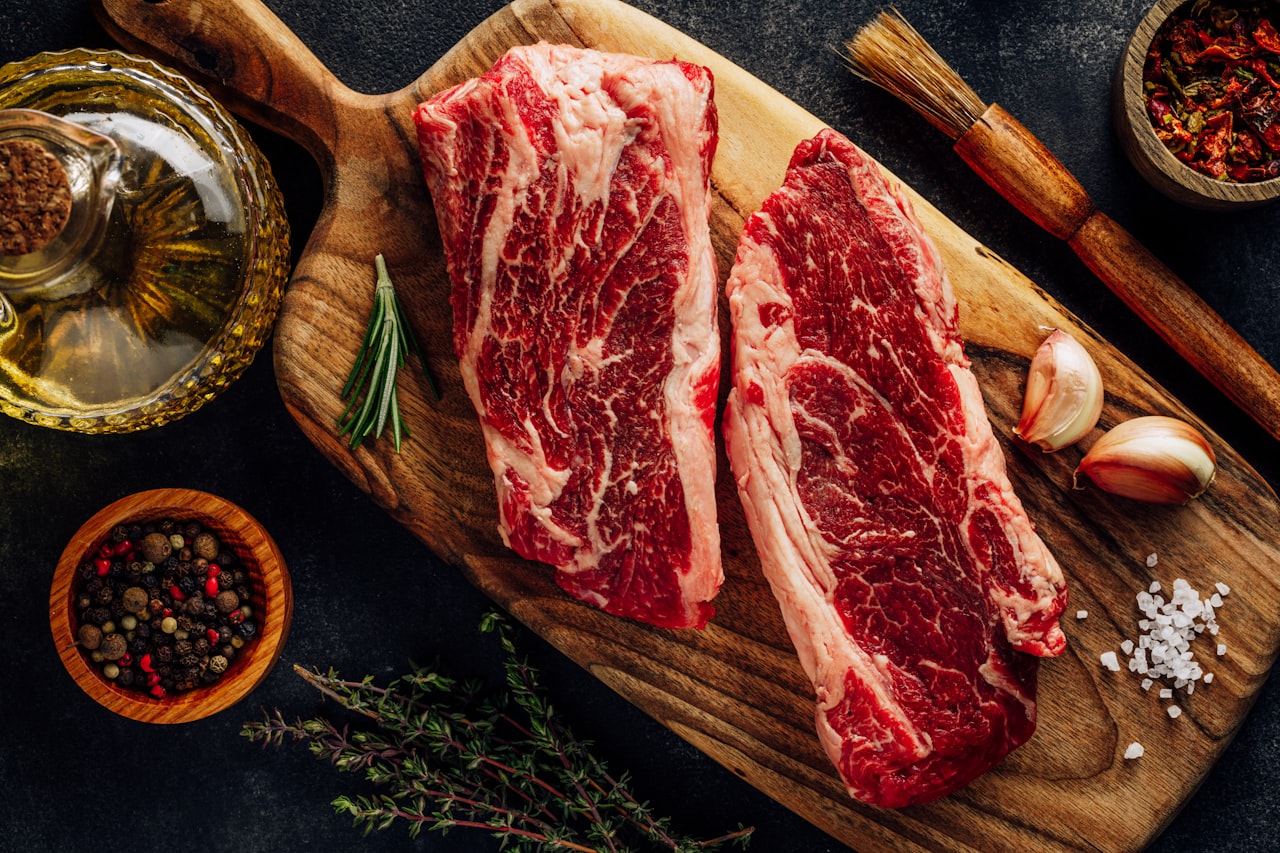
US shoppers are paying about $8.62 a pound for ground beef, up 12%, and roughly $12.80 for steak, up 16%. It is not a demand spike — it is arithmetic. A structurally tight cattle supply means fewer animals chasing the same appetite, and price is the only variable left to move. Globally, the FAO Meat Price Index is pressing record territory.
▮ The ripple, tracked

| Where the steer's price lands | What happens |
|---|---|
| The retail meat case | Ground beef ~$8.62/lb (+12%), steak ~$12.80/lb (+16%) |
| Restaurants and fast food | Menu prices climb; portions shrink; 'shrinkflation' spreads |
| Pet food | Organ and by-product costs rise with the whole carcass |
| Rendering and fats | Tallow and meal reference prices firm up |
| Global markets | The FAO Meat Price Index pushes toward records |
Specific figures are US retail (2026); downstream effects are directional across the protein complex.
Why this is everyone's problem
A steer is not one product but dozens. When its price rises, the floor lifts under lean trimmings, offal, fats and rendered meals alike — so a rancher's tight year quietly reprices a pet-food recipe and a pharma input on the other side of the world.
There is no such thing as an isolated beef price. Move the cost of the animal and you move the cost of everything it becomes.
The 4DW Angle
We trade the whole animal, not just the prime cuts, so the ripple in this chart is our daily weather. Diversified, multi-protein books absorb a beef spike by leaning on the streams and origins where value is moving — the single-product desk just pays the higher bill.

▮ Frequently asked questions
Why are US beef prices at record highs?
It is arithmetic, not a demand spike. A structurally tight cattle supply means fewer animals chasing the same appetite, so price is the only variable left to move. US shoppers now pay about $8.62 a pound for ground beef, up 12%, and roughly $12.80 for steak, up 16%.
How do high beef prices affect pet food and rendering?
A steer is not one product but dozens, so when its price rises, the floor lifts under lean trimmings, offal, fats and rendered meals alike. Pet-food organ and by-product costs climb with the whole carcass, and tallow and meal reference prices firm - repricing recipes and pharma inputs worldwide.
What is the FAO Meat Price Index showing in 2026?
The FAO Meat Price Index is pushing toward record territory in 2026, mirroring the tight-supply story visible in US retail beef. Because a steer becomes dozens of products, a rancher's tight year quietly reprices a pet-food recipe and a pharmaceutical input on the other side of the world.
Related from the desk
SOURCES