
Key Takeaways
- ▸Beef tallow prices have climbed toward a record near 90 cents per pound.
- ▸Renewable diesel and sustainable aviation fuel demand is driving tallow's price surge.
- ▸Tallow is a rendered by-product of beef processing, not a primary product.
- ▸Fuel makers favor tallow as a low-carbon feedstock, competing with food and feed uses.
- ▸Higher tallow values boost rendering revenue and the economics of animal processing.
4DW DESK · MARKET NOTE

There was a time when tallow was the quiet co-product nobody argued over. That time is over.
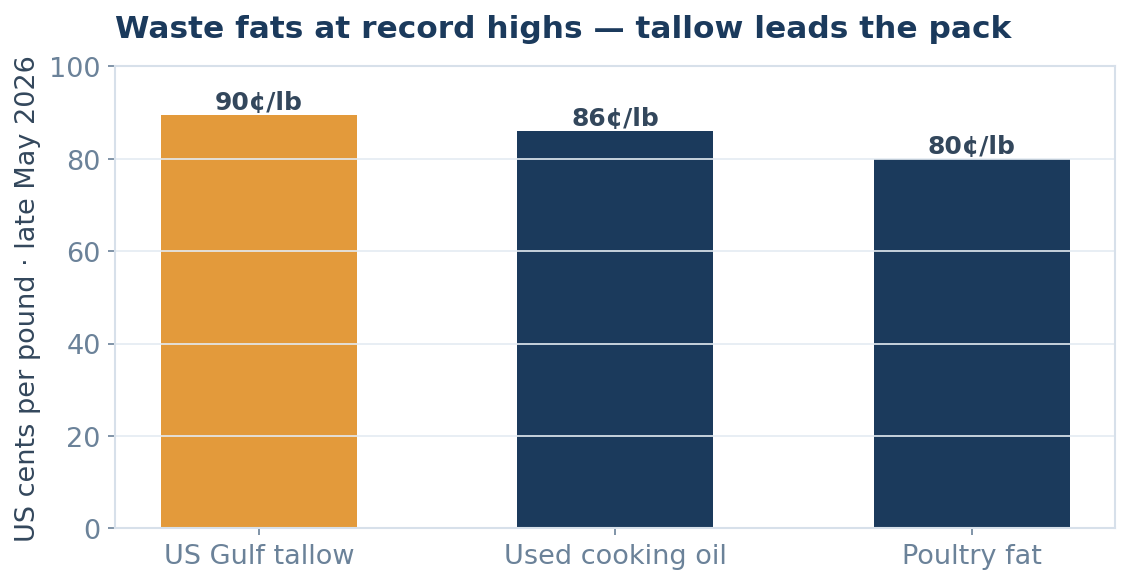
US Gulf tallow traded at 89–90 cents a pound in late May — the highest level since price assessments began in 2022. Used cooking oil sits at 86¢, poultry fat in the low 80s. The engine behind it: the 45Z Clean Fuel Production Credit and freshly finalized blending mandates for 2026–27, which reward exactly the low-carbon feedstocks renderers produce.
The arithmetic problem
Renewable diesel blending hit 274 million gallons in April; waste fats and greases already generate about 22% of D4 biofuel credits. But animal fat is a co-product — you can't make more of it without slaughtering more animals, and US cattle slaughter is down 8.2% this year. As one market participant put it, there simply aren't enough approved triglycerides in North America to run the industry Washington wants.
You can mandate demand. You can't mandate cattle. The gap between the two is called imports.
Which is why South American tallow, poultry fat and technical proteins are being courted like never before — with documentation and carbon-intensity paperwork becoming as important as the fat itself.
THE 4DW ANGLE
Rendering is one of our four segments precisely because these flows are program business: steady volumes, batch documentation, flexitank logistics. If you produce fats in South America — or buy them anywhere — the 2026-27 mandate cycle is your market.

▮ Frequently asked questions
Why is beef tallow so expensive right now?
Beef tallow prices have surged toward a record near 90 cents per pound because biofuel producers are buying it as a low-carbon feedstock. Booming demand for renewable diesel and sustainable aviation fuel (SAF) puts fuel refiners in direct competition with traditional food, feed, and oleochemical buyers, tightening supply and lifting prices.
What is beef tallow and where does it come from?
Beef tallow is rendered fat from cattle, produced when trimmings and fatty tissue from beef processing are cooked down at rendering plants. It is a by-product, not a primary output, of the meat industry. Traditionally used in food, soap, and animal feed, tallow is now heavily demanded as a biofuel feedstock.
How does renewable diesel affect the meat industry?
Renewable diesel and SAF demand raises the value of tallow and other animal fats, turning a low-value rendering by-product into a sought-after commodity. This improves rendering economics and adds a revenue stream for meat processors. It also creates competition between the fuel and food sectors for the same fats.
Related from the desk
SOURCES