
INSIDE THE INDUSTRY
Every frozen container leaving Brazil sails under three letters — and those letters decide who pays the freight, who buys the insurance and whose problem it is if the voyage goes wrong.
Key Takeaways
- ▸ Under FOB, CFR and CIF alike, risk passes to the buyer once goods are on board.
- ▸ CIF makes the seller insure the cargo — minimum Institute Cargo Clauses (C), 110% of invoice value.
- ▸ Incoterms date to 1936; the 2020 edition has 11 rules, four of them sea-only.
- ▸ For containers, the ICC recommends FCA over FOB: risk then transfers at the terminal, not at loading.
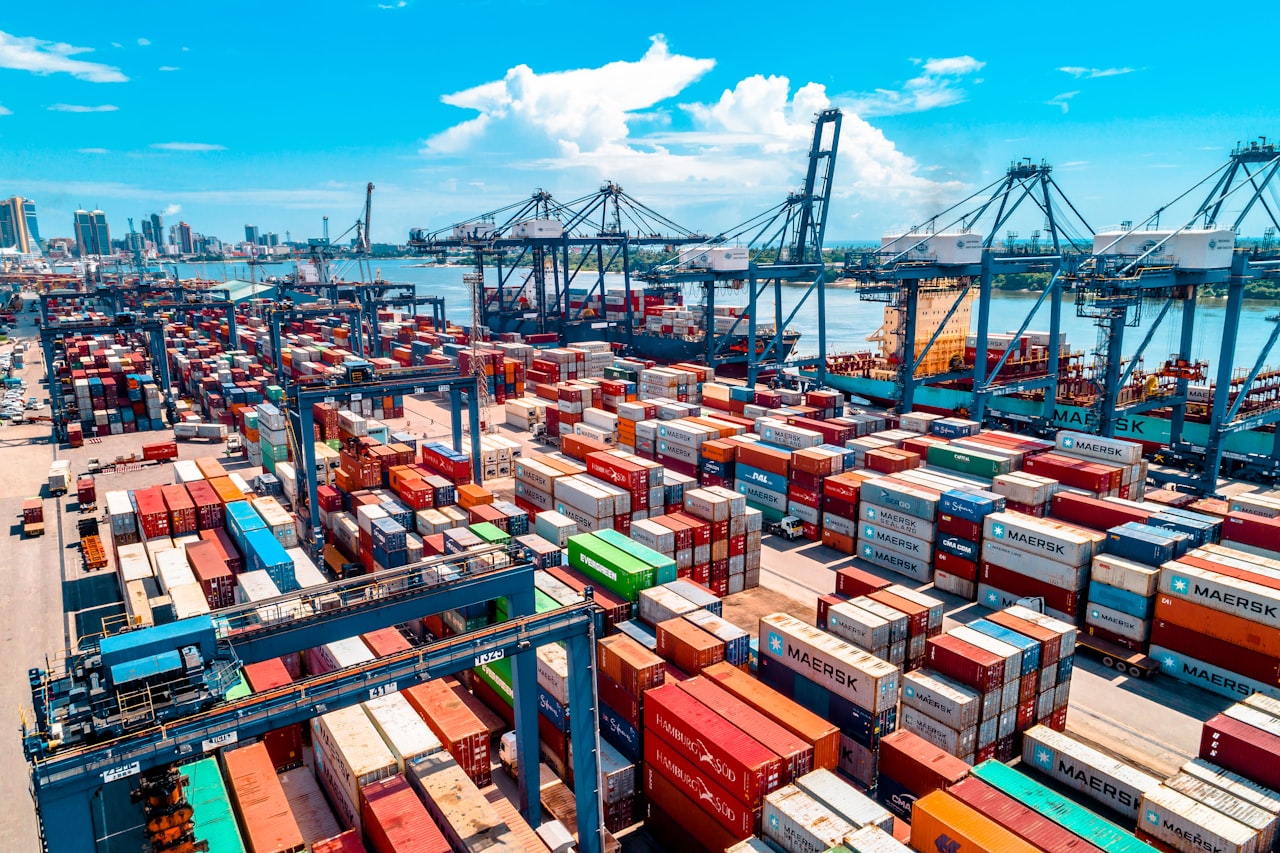
▮ Three letters that price every container
Listen to any protein trading desk for an hour and every offer ends the same way: FOB Paranaguá, CFR Manila, CIF Alexandria. Those codes are Incoterms — standardized trade terms published by the International Chamber of Commerce since 1936. The current edition, Incoterms 2020, counts 11 rules, and ocean-going commodity trade leans on the four written exclusively for sea and inland-waterway transport: FAS, FOB, CFR and CIF.
Their power is compression. Who books the vessel? Who pays ocean freight? Who insures the cargo? Who clears export customs? One three-letter code answers all of it — and, most importantly, it fixes the exact moment when the cargo stops being the seller's problem.
▮ The moment of truth: “on board”
Here is the part that surprises people: FOB, CFR and CIF all transfer risk at exactly the same moment — when the goods are loaded on board the vessel at the port of shipment. A CIF buyer does not get “more protection” on risk; the seller simply bundles more services — freight, insurance — into the price after that point.
Until the 2010 revision, the trigger was the cargo crossing the “ship's rail”, an imaginary line above the quay. Since then the test is simply on board. Before that moment: seller's cargo, seller's cost. After it: buyer's risk, whatever the invoice says about freight. Which is why a CIF seller who insures the voyage is insuring someone else's risk — and why the policy must be issued blank-endorsed and travel with the shipping documents.
| Term | Ocean freight | Marine insurance | Risk passes to buyer |
|---|---|---|---|
| FOB — Free on Board | Buyer books and pays | Buyer's choice | Goods on board, load port |
| CFR — Cost and Freight | Seller pays to destination port | Buyer's choice — none required | Same — on board, load port |
| CIF — Cost, Insurance and Freight | Seller pays to destination port | Seller must insure — ICC (C), min. 110% of invoice | Same — on board, load port |
Under all three, the seller clears export in the origin country. Source: ICC, Incoterms® 2020.

▮ What CIF actually buys you
Under CIF, Incoterms 2020 obliges the seller to buy marine cargo insurance at Institute Cargo Clauses (C) level or equivalent — the minimum tier — for at least 110% of the invoice value, in the currency of the contract, covering the goods from load port to destination port, with the certificate handed over blank-endorsed so the buyer can claim directly (Trade Finance Global).
Mind the fine print: ICC (C) covers the big maritime casualties — fire, grounding, collision, jettison — not theft, not wetting and, crucially for this industry, generally not a reefer genset failure that thaws a container; frozen-cargo cover needs broader clauses. That is why many protein buyers either negotiate ICC (A) “all-risks” into the contract or simply buy CFR and arrange insurance themselves. Incoterms 2020 sharpened exactly this point on the multimodal side: CIP now defaults to ICC (A) cover, while CIF stays at minimum ICC (C) (ICC Academy).
▮ The container catch
The classic sea terms were written for cargo lifted over a ship's side. A modern reefer container is handed to the carrier at a terminal gate days before loading — and then sits in a stack, out of everyone's reach. Under FOB, CFR or CIF, the seller technically stays on risk through that whole window. The ICC's own guidance is blunt about it:
“FCA is the appropriate rule when goods are transported in containers or pallets and multiple modes of transportation are used.” — ICC Academy, Incoterms® 2020: FCA or FOB?
In the commodity protein world, habit, price benchmarks and letters of credit keep FOB, CFR and CIF on the invoice anyway — and that is workable, as long as both sides know where the risk window really sits and whose insurance is watching the container in the stack. The point of the three letters is not tradition; it is that nobody discovers the answer for the first time after a claim.
▮ From sailing ships to Incoterms 2020
DID YOU KNOW?
CIF is nearly a century older than the rulebook that defines it. The term grew out of mid-1800s ocean commerce, and FOB was appearing in English trade decades earlier — the ICC only wrote them down as Incoterms in 1936.

THE 4DW ANGLE
Every 4D World quote starts with one of these letters. From our own plant — SIF 4075 / Nutre Meat, Ibiporã, Paraná — and a vetted Brazilian supplier network, the desk ships food-grade cuts and offal, frozen CAT-3 pet-food raw materials for Europe, pharmaceutical raw materials and rendering by-products — quoted FOB Brazilian ports, CFR/CIF into Europe, Asia, Africa and the Americas, or DDP inside Europe through our fiscal representation when buyers want the door, not the port. Tell us how your insurance and finance are set up, and we will quote the term that actually fits.
▮ Frequently asked questions
What is the difference between FOB, CFR and CIF?
All three transfer risk at the same moment — when goods are loaded on board at the port of shipment. The difference is cost. Under FOB the buyer books and pays ocean freight; under CFR the seller pays freight; under CIF the seller pays freight and must also insure the cargo for at least 110% of invoice value.
Who pays for insurance under CIF?
The seller. Under Incoterms 2020, a CIF seller must buy marine cargo insurance at minimum Institute Cargo Clauses (C) level, covering at least 110% of the invoice value, and hand the buyer a blank-endorsed certificate so the buyer can claim directly. Many frozen-cargo buyers negotiate broader ICC (A) cover instead.
Which Incoterm should I use for refrigerated containers?
The ICC recommends FCA, CPT or CIP for containerized cargo, because a container is handed to the carrier at the terminal — days before it is loaded. FOB, CFR and CIF, first codified in 1936, keep the seller on risk until loading. In practice, much frozen protein still trades on the classic sea terms.
RELATED FROM THE DESK
SOURCES